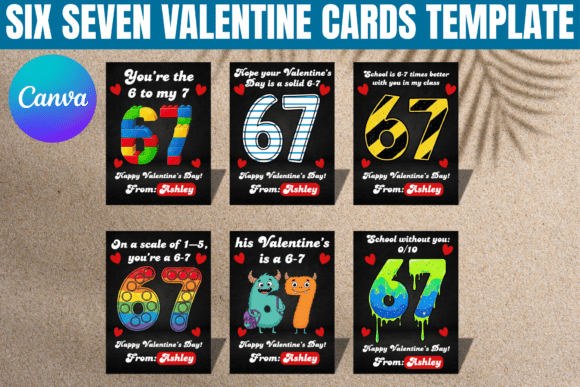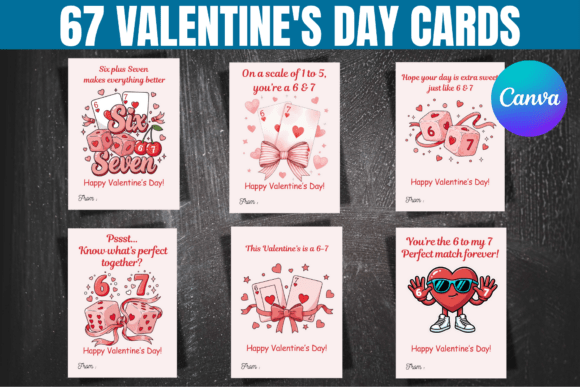
67 Valentine's Day Cards Template: Modern Tween & Teen Designs
Finding Valentine's cards that resonate with middle schoolers and high schoolers can be tricky. The cute, childish designs of elementary school no longer fit, but overly romantic themes aren't right either. That's where the 67 Valentine's Day Cards Template set comes in. This collection of editable Canva templates is specifically designed with tweens and teens in mind, offering a cool, modern, and trendy alternative for classroom exchanges. Forget generic; these cards use current slang and the playful "Six Seven" theme to create something students will actually want to give and receive.
Understanding the "Six Seven" Valentine's Card Aesthetic
The visual personality of these templates is confident, clean, and contemporary. They move away from traditional Valentine's pinks and reds, incorporating a broader palette that feels more mature and gender-inclusive. Think bold sans-serif typefaces for impact, paired with clean, legible fonts for messages. The designs often feature geometric shapes, modern patterns, and minimalist layouts that align with current design trends seen in social media graphics and youth-oriented branding. The overall appeal is one of understated cool—cards that feel thoughtfully designed rather than hastily printed.
As a designer, I appreciate how the templates balance readability with personality. The typography choices avoid overly ornate script fonts that can be hard to read at a glance, instead favoring modern typography that ensures the message is clear. This focus on legibility is crucial for a product meant for quick exchanges in a busy classroom. The consistent style across the 67 variations allows for personalization while maintaining a cohesive look if a student wants to use several from the set.
Practical Applications Beyond the Classroom
While the primary use case is school Valentine's parties, the versatility of these editable templates extends into several creative and commercial projects. For small business owners, particularly those targeting a teen demographic, these designs can be adapted for:
- Social Media Graphics: Use individual elements or card layouts to create Instagram Stories or TikTok graphics promoting Valentine's week sales or events. The trendy aesthetic aligns well with platform-specific design trends.
- Small-Scale Packaging: If you sell products like stickers, pins, or accessories popular with teens, consider using a modified card as a branded hang tag or thank-you note for February orders. It adds a timely, personalized touch.
- Blog & Newsletter Content: Content creators and bloggers can use the templates as visual aids for articles about teen trends, DIY gift ideas, or digital design tips, showcasing the modern typeface choices and layout principles.
- Event Invitations: Adapt the templates for youth group events, school club parties, or family gatherings with older children, saving significant design time while ensuring a professional look.
The key is to see the 67 Valentine's Day Cards Template not just as a finished product, but as a set of design assets. The Canva platform makes it straightforward to deconstruct these templates, pulling individual text styles, color combinations, or layout grids for other projects. This makes the set a valuable resource for anyone who regularly creates content for a younger audience.
Maximizing the Template: Customization and Pairing Tips
To get the most out of this resource, a thoughtful approach to customization is essential. Start by reviewing all 67 options to understand the range of layouts and messaging. Don't just change the name; consider adjusting the color scheme to match your school's colors or your personal brand identity. Canva's color picker tool makes this simple.
When thinking about font pairing for any modifications, stick to the established hierarchy within the templates. Typically, a bold display font is used for a key phrase or number (like "67"), while a clean sans-serif handles the main message. If you introduce a new font, ensure it complements rather than competes. A good rule of thumb is to pair a sans serif font with a subtle script font for a touch of elegance, but only if it maintains the overall modern feel. Avoid adding a heavy serif font that could clash with the contemporary vibe.
Practical testing is non-negotiable. Before printing a full batch, print a single test card on the paper you plan to use. Check that the colors appear as expected and that text remains crisp and readable at the final size. For digital use, preview the card on a phone screen, as that's how most recipients will first see it if shared digitally. This step ensures your customized design maintains its professional quality and readability.
Considering Licensing and Long-Term Use
An important note for commercial use: while the templates themselves are editable, some design elements within Canva may require a Canva Pro subscription. This includes certain premium images, graphics, or advanced features. The product description advises replacing these with your own or free alternatives if using the free version of Canva. For designers or businesses planning to use these templates repeatedly or for client work, verifying the licensing terms for any included assets is a necessary due diligence step.
Think of this template set as a foundational design asset. Its value lies in the time it saves and the professional starting point it provides. Whether you're a parent helping your teen create unique cards, a teacher organizing a class activity, or a marketer brainstorming content for a teen-focused campaign, the 67 Valentine's Day Cards Template offers a practical, stylish solution. It demonstrates how a well-curated set of templates can influence visual hierarchy, ensure brand consistency across multiple cards, and ultimately create a more engaging and recognizable result than a last-minute, generic purchase ever could.